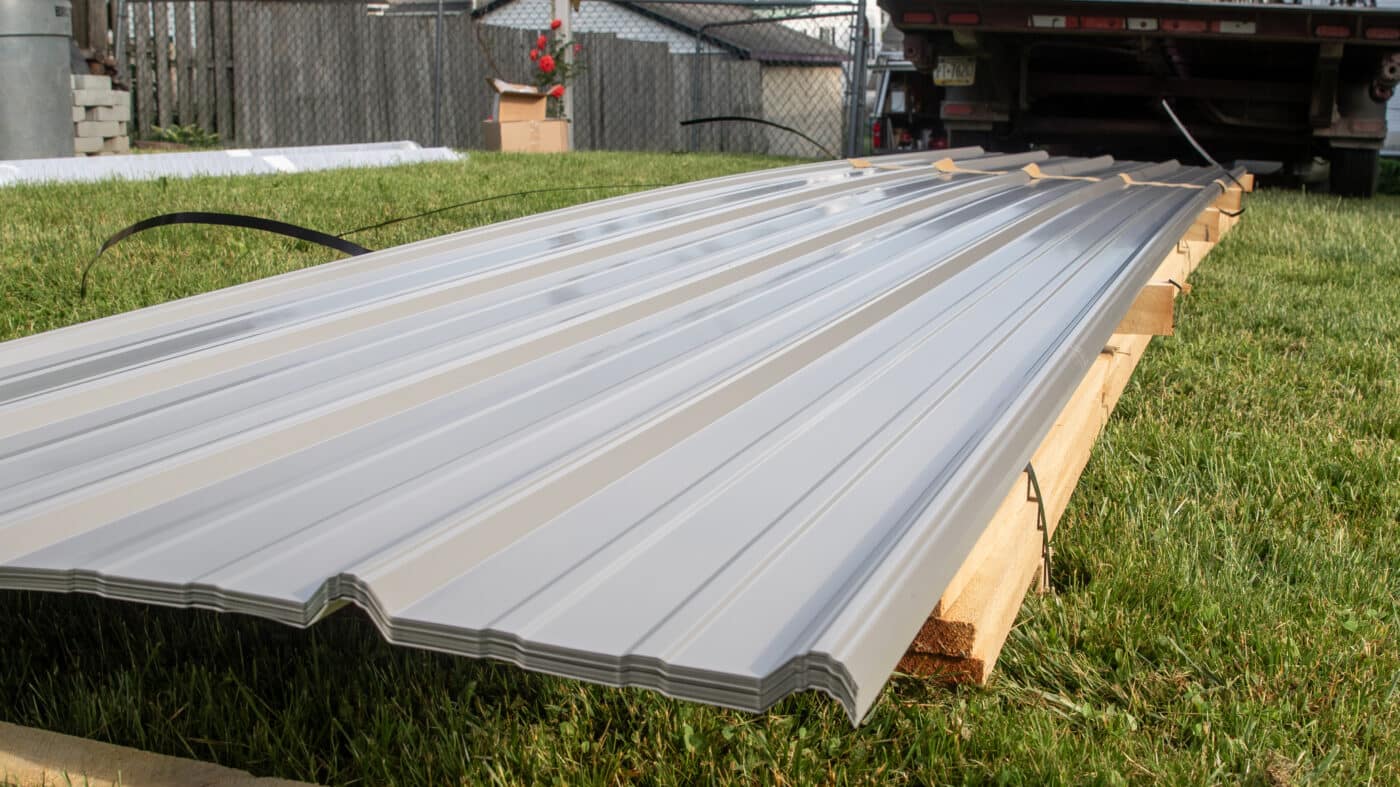
Corrugated Metal Profiles
Corrugated metal roofing comes in several profiles, and knowing them helps a Covington property owner choose the right one. Here are the common profiles.
Classic Corrugated
The classic corrugated profile features repeating rounded waves, the traditional look most associated with corrugated metal, common on agricultural and older buildings. This rounded corrugation is the original and most recognizable profile, with a distinctive, rustic appearance. For a traditional corrugated look, the classic rounded profile is the choice. It is the familiar wavy pattern that defines corrugated metal.
Ribbed Profiles
Ribbed profiles, sometimes called R-panel or similar, feature trapezoidal ribs rather than rounded waves, offering a more angular, modern appearance and strong structural performance. These ribbed panels are widely used on a range of buildings, from agricultural to commercial to residential. The ribbed profile is a common, versatile choice with a cleaner, more contemporary look than classic corrugation. It suits many applications.
Profile and Strength
The profile affects the panel's structural strength, with the corrugation or ribs determining how well the panel spans and resists bending. Different profiles suit different structural needs and spacing. A contractor can advise which profile fits a given application's requirements. The profile is functional as well as aesthetic, influencing the panel's performance. It matters for both look and strength.
Profile and Appearance
Beyond strength, the profile shapes the roof's appearance, with classic corrugation giving a traditional, rustic look and ribbed profiles offering a more angular, modern one. The choice depends partly on the look you want for the building. For a rustic agricultural appearance, classic corrugation fits, while ribbed profiles suit a cleaner look. The profile is a key aesthetic decision. It defines the roof's character.
Choosing a Profile
The right profile depends on your project's structural needs, the look you want, and the application, and a contractor experienced in corrugated metal helps you choose. Whether for an agricultural building, an outbuilding, or a home, there is a profile suited to the purpose. Matching the profile to the project ensures both proper performance and the desired appearance. The choice fits the application. A contractor guides it.
Profiles, in Short
Corrugated metal comes in classic rounded corrugation for a traditional look and ribbed profiles for a more modern one, with the profile affecting both structural strength and appearance. The right profile depends on the project's needs and the look you want.
It also helps Covington property owners to understand that, like all exposed-fastener metal roofing, a corrugated metal roof's long-term performance depends partly on a modest but real maintenance commitment, namely keeping up with the fasteners. The exposed screws that hold the panels down each pass through the metal surface and are sealed by a rubber washer, and over many years of the metal expanding and contracting through the heat and cold, some of those screws can gradually loosen or back out, and their washers can harden and crack. When that happens, a fastener can begin to let water in at its penetration, which is the most common way an otherwise sound corrugated metal roof develops a leak. The good news is that this is straightforward, manageable maintenance, not a flaw that undermines the roof. Periodically checking the fasteners, ideally as part of a general inspection and after major storms, and replacing any that have loosened or whose washers have worn, before they can leak, keeps the roof watertight and helps it reach its full lifespan. On a roof that has aged to the point where fasteners are failing widely, it can make sense to address them across the whole roof at once rather than chasing individual leaks. For a property owner, the practical takeaway is that corrugated metal offers excellent durability and value at a low cost, with the understanding that the exposed fasteners are the part of the roof that benefits from periodic attention over the decades, which is a reasonable trade for the affordability and is easily handled by keeping up with inspections.
It also helps Covington property owners to understand that, like all exposed-fastener metal roofing, a corrugated metal roof's long-term performance depends partly on a modest but real maintenance commitment, namely keeping up with the fasteners. The exposed screws that hold the panels down each pass through the metal surface and are sealed by a rubber washer, and over many years of the metal expanding and contracting through the heat and cold, some of those screws can gradually loosen or back out, and their washers can harden and crack. When that happens, a fastener can begin to let water in at its penetration, which is the most common way an otherwise sound corrugated metal roof develops a leak. The good news is that this is straightforward, manageable maintenance, not a flaw that undermines the roof. Periodically checking the fasteners, ideally as part of a general inspection and after major storms, and replacing any that have loosened or whose washers have worn, before they can leak, keeps the roof watertight and helps it reach its full lifespan. On a roof that has aged to the point where fasteners are failing widely, it can make sense to address them across the whole roof at once rather than chasing individual leaks. For a property owner, the practical takeaway is that corrugated metal offers excellent durability and value at a low cost, with the understanding that the exposed fasteners are the part of the roof that benefits from periodic attention over the decades, which is a reasonable trade for the affordability and is easily handled by keeping up with inspections.
It also helps Covington property owners to understand that, like all exposed-fastener metal roofing, a corrugated metal roof's long-term performance depends partly on a modest but real maintenance commitment, namely keeping up with the fasteners. The exposed screws that hold the panels down each pass through the metal surface and are sealed by a rubber washer, and over many years of the metal expanding and contracting through the heat and cold, some of those screws can gradually loosen or back out, and their washers can harden and crack. When that happens, a fastener can begin to let water in at its penetration, which is the most common way an otherwise sound corrugated metal roof develops a leak. The good news is that this is straightforward, manageable maintenance, not a flaw that undermines the roof. Periodically checking the fasteners, ideally as part of a general inspection and after major storms, and replacing any that have loosened or whose washers have worn, before they can leak, keeps the roof watertight and helps it reach its full lifespan. On a roof that has aged to the point where fasteners are failing widely, it can make sense to address them across the whole roof at once rather than chasing individual leaks. For a property owner, the practical takeaway is that corrugated metal offers excellent durability and value at a low cost, with the understanding that the exposed fasteners are the part of the roof that benefits from periodic attention over the decades, which is a reasonable trade for the affordability and is easily handled by keeping up with inspections.
Choose the Right Profile
Covington Metal Roofing installs corrugated metal roofing in various profiles across Covington and Fountain County. Call (765) 676-3491 for a free consultation on the profile that suits your project's structural needs and the look you want.